workstudioinsightslet's talk ↗
We turn ideas into digital products.
  • Home
  • Work
  • Studio
  • Insights
  • Let's talk

Find us

  • Instagram
  • LinkedIn
When Microsoft Misfired

When Microsoft Misfired

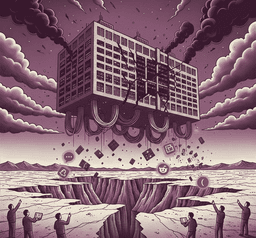
What the October 2025 Microsoft Azure outage taught us about cloud fragility

October 27, 2025

It was midday. One minute I was building a deployment for a small project, the next I was staring at a flood of error-screens in Slack: login loops, API timeouts, dashboards stuck spinning.

I refreshed the status page for Azure. Nothing obvious. Then I checked Twitter (okay, X) and saw it: “Azure down — lots of services impacted.” My coffee went cold.

What Went Wrong

According to Microsoft’s own updates, the trigger was an “inadvertent configuration change” affecting its global delivery layer, specifically Azure Front Door (AFD)—a content and application delivery network. TechRadar+3The Verge+3DataCenterKnowledge+3

The chain of events:

A configuration change was pushed, triggering failures in AFD. The Verge

DNS/traffic routing anomalies resulted in broad service latency, time-outs, and error loops. DataCenterKnowledge+1

Major external services (including Azure’s own ones: Microsoft 365, Outlook, Xbox, Minecraft) stopped working or degraded. The Independent+2The Verge+2

Recovery came via rollback to a “last known good configuration” and rerouting of traffic through healthy nodes. TechRadar+1

The outage lasted over eight hours in many places before services began returning to normal. Reuters+1

Why This Hit So Hard

For most of us building apps and systems, cloud-regions and load-balancers feel abstract, far removed. But this episode brought it home:

If your services sit on someone else’s cloud stack you inherit their weaknesses.

Multi-AZ deployment means nothing if the delivery network or DNS layer fails for the entire region/provider.

Even businesses that don’t run “classic cloud services” got hit—airlines, retail, gaming. When the plumbing fails, downstream systems fail. AP News+1

And let’s call a spade a spade: we have precisely one real cloud strategy when everyone uses the same two or three providers. That’s not redundancy—it’s reliance.

What I’m Doing Differently

After cleaning up slack alerts and reassuring users (“Yes, we’re okay now”), I revisited our architecture with fresh eyes. Here’s the checklist I’m taking seriously now:

Deploy at least something outside the main region/provider: even a health-check endpoint or fallback service in an alternate provider or region.

Know your delivery layer dependencies: DNS, CDN, edge services. If these go down, your app might still run—but reachability disappears.

Expect the provider to fail: build for failure, don’t assume resilience by default.

Communicate early: status updates to users beat silence. If your SLA depends on “cloud uptime,” you need a plan for when the cloud goes dark.

Simulate the failure: what happens if your cloud provider’s core network fails? What systems still work in “limited mode”?

Bigger Picture: The Internet with Fewer Switches

We like to imagine the internet as resilient, distributed, decentralised. But consider this: when a single provider’s configuration change can ripple into airline check-ins, Xbox sign-ups, Outlook logins—how distributed is it really?

We’re at a point where the question isn’t if a major provider will glitch, it’s when. And every time it happens, we’re reminded that:

Cloud = convenience, but not magic.

Concentration of infrastructure increases systemic risk.

Diversification (geography + provider + architecture) is becoming essential, not optional.

Final Thoughts

The Azure outage of October 2025 didn’t just knock out services—it knocked the shine off the myth that “the cloud” means bullet-proof. For developers, it’s a reminder: your system’s resilience isn’t guaranteed by your cloud provider’s marketing. It’s earned by your design.

The next time you spin up a project in Azure, ask yourself: “What happens if Azure itself fails?” Because the cloud isn’t an abstraction—it’s a system built by humans, subject to human mistakes, and occasionally… just down.

Thanks for being here. If this resonated, I’d love to hear how your team handled the outage—or whether you’re rethinking your cloud strategy now.

Ollie Darby

About Ollie Darby

Ollie Darby, is the co-founder of Tradible, a visionary leader in the realm of digital collectibles. With a robust background as a skilled full-stack software engineer, Ollie's expertise spans across a spectrum of technologies.

When Microsoft Misfired

What the October 2025 Microsoft Azure outage taught us about cloud fragility

October 27, 2025

It was midday. One minute I was building a deployment for a small project, the next I was staring at a flood of error-screens in Slack: login loops, API timeouts, dashboards stuck spinning.

I refreshed the status page for Azure. Nothing obvious. Then I checked Twitter (okay, X) and saw it: “Azure down — lots of services impacted.” My coffee went cold.

What Went Wrong

According to Microsoft’s own updates, the trigger was an “inadvertent configuration change” affecting its global delivery layer, specifically Azure Front Door (AFD)—a content and application delivery network. TechRadar+3The Verge+3DataCenterKnowledge+3

The chain of events:

A configuration change was pushed, triggering failures in AFD. The Verge

DNS/traffic routing anomalies resulted in broad service latency, time-outs, and error loops. DataCenterKnowledge+1

Major external services (including Azure’s own ones: Microsoft 365, Outlook, Xbox, Minecraft) stopped working or degraded. The Independent+2The Verge+2

Recovery came via rollback to a “last known good configuration” and rerouting of traffic through healthy nodes. TechRadar+1

The outage lasted over eight hours in many places before services began returning to normal. Reuters+1

Why This Hit So Hard

For most of us building apps and systems, cloud-regions and load-balancers feel abstract, far removed. But this episode brought it home:

If your services sit on someone else’s cloud stack you inherit their weaknesses.

Multi-AZ deployment means nothing if the delivery network or DNS layer fails for the entire region/provider.

Even businesses that don’t run “classic cloud services” got hit—airlines, retail, gaming. When the plumbing fails, downstream systems fail. AP News+1

And let’s call a spade a spade: we have precisely one real cloud strategy when everyone uses the same two or three providers. That’s not redundancy—it’s reliance.

What I’m Doing Differently

After cleaning up slack alerts and reassuring users (“Yes, we’re okay now”), I revisited our architecture with fresh eyes. Here’s the checklist I’m taking seriously now:

Deploy at least something outside the main region/provider: even a health-check endpoint or fallback service in an alternate provider or region.

Know your delivery layer dependencies: DNS, CDN, edge services. If these go down, your app might still run—but reachability disappears.

Expect the provider to fail: build for failure, don’t assume resilience by default.

Communicate early: status updates to users beat silence. If your SLA depends on “cloud uptime,” you need a plan for when the cloud goes dark.

Simulate the failure: what happens if your cloud provider’s core network fails? What systems still work in “limited mode”?

Bigger Picture: The Internet with Fewer Switches

We like to imagine the internet as resilient, distributed, decentralised. But consider this: when a single provider’s configuration change can ripple into airline check-ins, Xbox sign-ups, Outlook logins—how distributed is it really?

We’re at a point where the question isn’t if a major provider will glitch, it’s when. And every time it happens, we’re reminded that:

Cloud = convenience, but not magic.

Concentration of infrastructure increases systemic risk.

Diversification (geography + provider + architecture) is becoming essential, not optional.

Final Thoughts

The Azure outage of October 2025 didn’t just knock out services—it knocked the shine off the myth that “the cloud” means bullet-proof. For developers, it’s a reminder: your system’s resilience isn’t guaranteed by your cloud provider’s marketing. It’s earned by your design.

The next time you spin up a project in Azure, ask yourself: “What happens if Azure itself fails?” Because the cloud isn’t an abstraction—it’s a system built by humans, subject to human mistakes, and occasionally… just down.

Thanks for being here. If this resonated, I’d love to hear how your team handled the outage—or whether you’re rethinking your cloud strategy now.

Ollie Darby

About Ollie Darby

Ollie Darby, is the co-founder of Tradible, a visionary leader in the realm of digital collectibles. With a robust background as a skilled full-stack software engineer, Ollie's expertise spans across a spectrum of technologies.

What did you think of this post?

AmazingGoodMehBad
Thanks for rating this post—join the conversation by commenting below.

Subscribe to Circle Square Blog

Get the latest insights on AI, design, and technology

StarStarStarStarStar

"This might be the best value you
can get from an AI subscription."

- Jay S.

MailEvery Content
AI&I PodcastAI&I Podcast
CoraCora
SparkleSparkle
SpiralSpiral

Join 100,000+ leaders, builders, and innovators

Community members

Email address

Email

Already have an account? Sign in

What is included in a subscription?

Daily insights from AI pioneers + early access to powerful AI tools

SparkleSpiralAI&I PodcastEveryCora
PencilFront-row access to the future of AI
CheckIn-depth reviews of new models on release day
CheckPlaybooks and guides for putting AI to work
CheckPrompts and use cases for builders
CheckIn-depth reviews of new models on release day
CheckPlaybooks and guides for putting AI to work
CheckPrompts and use cases for builders
SparksBundle of AI software
Sparkle

Sparkle:Organize your Mac with AI

Cora

Cora:The most human way to do email

Spiral

Spiral:Repurpose your content endlessly

Sparkle
Sparkle:Organize your Mac with AI
Cora
Cora:The most human way to do email
Spiral
Spiral:Repurpose your content endlessly

Related Essays

When AWS Sneezes, the Internet Catches a Cold

When AWS Sneezes, the Internet Catches a Cold

What the October 2025 outage revealed about our quiet dependency on the cloud

Oct 20, 2025

Ollie DarbyOllie Darby

Say no more It's a match ↓

  • General questions
    hello@circlesquare.studio
  • New business enquiries
    Contact
  • Instagram
  • LinkedIn
  • 3rd Floor, 86-90 Paul Street London England EC2A 4NE United Kingdom

    GPS
    N 51° 31' 32.32" W 0° 5' 01.15"
  • Psst Psst. Wanna get Spammm?

Venture — coming soon. We co-build with founders.

Tell us what you're building. Give us the real version — what stage you're at, what's broken, what you need. The more honest you are, the faster we can tell you whether we can help.

01.
Brief us on what you need:
02.
Budget (£)
03.
Your Company
04.
Your Name
05.
Your Email
06.
Project Details
07.
Project Delivery Date
08.
How did you find us?

FAQ

Eight things worth knowing before we work together.

  • Mostly early-stage startups and founders building something for the first time — or rebuilding something that didn't work the first time. We've been through it ourselves, so we understand the constraints.

  • We're flexible. Sometimes it's a full brand and website. Sometimes it's one component that's holding everything else back. Tell us what you need and we'll be straight with you.

  • It depends on the scope, but most projects start with a brief discovery session — paid, focused, and designed to get us both clear on what actually needs doing.

  • By project, not by the hour. We scope it properly upfront so there are no surprises on either side.

  • Yes. If you've got something that's working, we build on it. If it isn't working, we'll tell you.

  • Fully. We've worked with founders across the UK and Europe. If you're local and want to meet, great — but it's not a requirement.

  • Front-end: Next.js, React, TypeScript. We pick the right tool for the project rather than defaulting to one stack.

  • Occasionally we co-build with early-stage founders — equity arrangements, sprint-based partnerships, or acting as a technical co-founder for the first stretch. It's selective. If it sounds relevant, mention it when you get in touch.

Testimonials

The kind words are on their way. We're just getting to work first.

Coming soon

Good things to say — soon.

Coming soon

Watch this space

01 — 05